

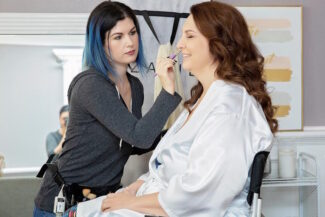
Your foundation should blend with your skin, not change its color. Finding the right shade is an important part of creating your bridal look.
Photo: Lia's Photography
Why Does My Foundation Turn Orange, Gray, or Ashy?
Have you ever applied foundation that looked beautiful at first, then noticed it looked orange later? Or taken a photo and wondered why your skin looked gray when it did not look that way in the mirror?
If this has happened to you, I understand why you might feel nervous about your wedding makeup. You want your face to look like it belongs with your neck and shoulders. You want coverage, but you still want to recognize yourself.
I’m Diana, the bridal makeup artist behind Makeup By Diana in Arizona. Foundation matching is an important part of creating a bridal look that feels like you.
Foundation can look orange when the shade is too warm or when its color changes as it wears. It can look gray or ashy when it is too light, has the wrong undertone, or is combined with products that leave a pale cast. Lighting and photography can also affect how the color appears.
The answer is not always more coverage. First, we need to understand what is causing the mismatch.
Why does my foundation turn orange?
There are two things to look at: how the foundation looks when you apply it and how it looks after you have worn it.
The shade may be too warm from the beginning
A foundation can be close to your skin’s lightness or depth but still contain too much yellow, peach, or red for your complexion.
Under warm bathroom or store lighting, that difference may be difficult to see. In natural daylight, it can become much more noticeable.
If your foundation looks orange as soon as you apply it, check the shade and undertone before assuming the formula is changing color.
The color may change as it settles or wears
Some foundations become darker or warmer after application. This is often called “oxidation,” although not every change in color is caused by the same process. The formula drying down, skin oils, and products underneath can all affect how it looks.
This is why I do not recommend choosing a foundation based only on a fresh swatch.
Give it time to settle, then check it again. If possible, wear a sample for several hours before deciding whether it is right for you.
Do not automatically buy a lighter shade to compensate. That can leave you with a foundation that looks too pale at first and still looks wrong later.
Why does my foundation look gray or ashy?
A gray or ashy finish can happen on different complexions, but a pale cast can be especially noticeable on deeper skin.
Here are a few things to check.
Your foundation may be too light
A lighter foundation does not always make skin look brighter. It can take away the natural richness of your complexion and leave a pale layer over it.
For bridal makeup, creating brightness in selected areas is different from making the whole face lighter.
The undertone may not match
Your skin tone describes how light or deep your skin is. Your undertone is the underlying color that helps determine which foundation shades blend naturally with it.
You may see pink, golden, red, or olive tones, or a more balanced combination.
Any skin depth can have different undertones. Fair skin is not always cool, and deep skin is not always warm.
A foundation that looks gray may have the wrong balance of color for your skin, even when its depth seems close.
Your powder may be changing the finish
If your foundation looks right before powder but pale afterward, check the powder separately.
Its color, the amount you apply, and how it behaves in photos can all make a difference. A product labeled “translucent” is not guaranteed to be invisible on every complexion.
The goal is to set your makeup without covering your natural skin tone with a noticeable pale layer.
Why is foundation sometimes difficult to match to olive skin?
If foundations often look too pink, orange, or yellow on you, you may have an olive undertone.
Olive skin can be light, medium, or deep. It can also lean warmer, cooler, or more neutral, so choosing a golden foundation is not automatically the answer.
Sometimes a shade is the correct depth but still does not have the right balance of color. Comparing a few shades in daylight can help you see that difference.
You do not need to know the exact name of your undertone before your bridal appointment. If you have struggled to find a match, that is useful information to share with your artist.
Why does my foundation look right in the mirror but wrong in photos?
Lighting changes how we see color. A foundation that seems to blend under warm indoor lights may look different near a window or outside.
Photos add other variables, including flash, exposure, and image editing.
If your face looks much lighter in a flash photo, it does not automatically mean your foundation shade is wrong. Powder or other products may be contributing to the pale appearance.
That is why it helps to check the complete makeup look – not just foundation on its own.
For your wedding, the aim is a balanced match between your face and the skin visible around it, including your neck and chest.
How can I check whether my foundation matches?
Try this before committing to a new shade:
- Compare a few shades along your lower cheek and jaw. Your hand may not be the same color as your face.
- Look at your neck and chest too. This is especially helpful if your wedding dress leaves your shoulders or neckline visible.
- Check in natural, indirect daylight. Avoid relying only on bathroom lighting or direct, harsh sunlight.
- Let the foundation settle. Check it again after it dries down and later during wear.
- Notice what happens after other products. If the color changes after concealer, bronzer, or powder, foundation may not be the only issue.
- Use photos as an additional check. Compare them with what you see in person, rather than trusting a single phone photo.
A good match should blend naturally with the overall coloring of your face and surrounding skin. You should not need to cover your entire neck to hide a strong color difference.
Why does my concealer look gray under my eyes?
Sometimes concealer looks gray because it is too light. In other cases, the darkness underneath is still showing through.
Adding more of the same concealer can make the area look heavier without correcting the color.
Depending on your skin tone and the discoloration, a small amount of color corrector may help before concealer. Peach, salmon, or orange shades can suit different needs, but the right choice depends on your complexion.
Not every bride needs color correction. The goal is to use only what helps, while keeping the area looking natural.
How does a bridal makeup trial help with foundation matching?
Your bridal makeup trial is a chance to talk about what has not worked for you before.
Tell me if foundation usually turns orange on you, if powders look pale in photos, or if you dislike the feeling of heavy coverage. You can also bring photos of makeup you loved—or makeup that did not feel right.
These details help us understand what matters to you.
After your trial, notice how the makeup looks in different lighting and how it wears over the next few hours. Share what you see and how your skin feels. That feedback helps with planning your wedding-day makeup.
If you expect to have a spray tan for your wedding, discuss the timing before your trial. Your foundation needs to work with the skin color you will have on the day.
For more preparation advice, read What Happens at a Bridal Makeup Trial – and How to Prepare.
Questions brides ask about foundation matching
Does foundation turning orange mean I have oily skin?
No. Skin oils can influence how some formulas wear, but orange-looking foundation can also come from a shade that is too warm or a formula that changes as it dries. It can happen on different skin types.
Should my foundation match my face or my neck?
It should create a natural balance between your face, neck, and any visible chest area. These areas are not always exactly the same color, so matching only one small spot may not give the best overall result.
Can I tell my undertone from my veins or jewelry?
Vein color and jewelry preferences are not reliable enough to choose foundation on their own. Comparing actual foundation shades on your skin in daylight is more useful.
Does Arizona heat make foundation turn orange?
Heat does not automatically turn foundation orange. Sweat and oil can affect how makeup wears, which may change its appearance. If you are planning an outdoor wedding, testing the formula and discussing your schedule are both helpful.
You can read more in Will My Bridal Makeup Last in Arizona Heat?
Do I need full-coverage foundation for my wedding?
No. The coverage you choose should reflect your preferences and what your skin needs. A well-matched lighter foundation can look beautiful in wedding photos. More coverage does not fix the wrong shade.
Your bridal makeup should still look like you
If you have struggled with foundation before, I do not want you to feel that your skin is the problem.
You deserve a careful match and a look that respects your natural coloring. Whether you prefer soft coverage or a more defined bridal look, the starting point is understanding your skin and listening to what makes you feel beautiful.
My Arizona Bridal Makeup for Every Skin Tone guide explains more about choosing makeup for different complexions.
Looking for a bridal makeup artist in Arizona? Send me your wedding date, venue, and a little about the look you have in mind. I would love to hear what you are planning.